Do You Really Need a Smart Phone?

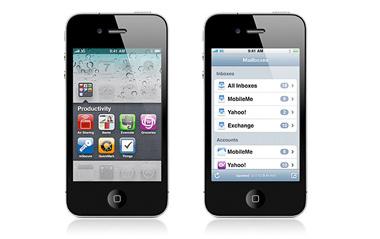
In the interest of getting more organized and staying on top of my life…I invested in an iphone last week. I’ve had the phone exactly 6 days, and I honestly don’t know how I kept up with anything before this!

Wondering if you should get one? Here’s what I wish I’d known two years ago–

I really do need to see my emails the minute they arrive in my in-box, and when they require immediate attention, no matter where I am, I can handle them.

I need my contacts and phone numbers and calendar all in one location…and it does need to fit in my pocket! No more organizer and business card holder and notepad.

The built-in GPS has already saved me three times!

The built-in camera comes in very handy, and I was able to get rid of the small one I was carrying in my purse–which always had dead batteries when I needed it.

I do need to know the weather anytime–the Weather Channel app is free and up-to-the-minute.

I can read my Kindle books anywhere, anytime–waiting in line, at the doctor’s office–and still read them on my actual Kindle at home. (No more carrying both with me.)

I don’t have to try to type my texts anymore–the iphone has voice recognition and types it for me. Incredibly accurate.

Oh, and the phone works, too. 🙂

That’s a short list of why I love it…there are multiple apps on my phone already, and I use them all. If you haven’t gotten yourself one of these phones, do it today. COMPLETELY WORTH IT.

If you’ve been wondering if you need one…YOU DO. Don’t wait like I did. I say again: Completely worth it!


How to dress for success at work – CNN.com

Does how a person dresses affect their paycheck? Better believe it. Great article on CNN about dress codes and how to command more respect and money.

How to dress for success at work – CNN.com.

The 50/30/20 budget fix – 1 – budgets & spending – MSN Money

It’s not easy, but the 50/30/20 budget fix works. Start where you are, and work toward the 50/30/20.

And why limit yourself to the 50?

  • It gives you flexibility. Your income could drop by half and you’d still be able to pay your essential bills. When your must-haves eat up more of your income, you have less ability to cope with setbacks such as layoffs, reduced work hours or unexpected expenses.
  • It helps you figure out what you can and can’t afford. If you’re considering adding a loan payment or other contractual obligation to your overhead, you simply check to see if it would push you over the 50% mark. If not, you can consider adding the payment; if so, you don’t.
  • It gives you balance. Limiting your overhead allows you to have money for the pleasures in life, such as dinners out and vacations, without stress. It also allows you to get out of debt and save for your future.

The 50/30/20 budget fix – 1 – budgets & spending – MSN Money.

Are you in the IRS’ cross hairs? – Audit triggers – MSN Money

Are you a target for an IRS audit? Read Jeff Schnepper’s article and take inventory of your situation. Tax day is right around the corner, and you want to be prepared, not just for now, but for audits that could come later.

Also, in case you ever are audited, check out this from the IRS website for more information on living through it.

via Are you in the IRS’ cross hairs? – Audit triggers – MSN Money.

The Trouble with Accountants

Question: What’s the definition of an accountant?

Answer: Someone who solves a problem you didn’t know you had in a way you don’t understand.

Few people know what accountants are talking about. Generally, nobody wants to talk to them unless they have to, and when pressed into conversation with one, images of screaming and half-dressed people in scary, dark places fill the mind.

Okay, maybe it’s not that bad…but close.

Most everyone has to deal with money and bills and taxes. And what do all bill-paying, tax-paying, money people want? We want fast, easy, and painless—without any scary, dark places.

We want Super Accountant to swoop in and fix everything!

But since Marvel never created this super heroine, and I’m having a hard time picturing what the special powers would be anyway—Disappearing decimals? Infinite pencil lead? Unwrinkle-able paper?—I’m at a loss.

Or I was…

Until I decided to start digging. What do I, non-super-heroine, need to know to manage my writing income? I’d learned plenty in college (Bachelor’s Degree) and plenty more in life (25 years’ experience in bookkeeping), but all of that just muddies the water. What’s the bare minimum I need to know to pull this stuff together and stay out of trouble?

I figured it out, and I wrote it all down. If you’re interested, you can save yourself the trouble of figuring it out yourself. Check out The Business of Writing.

I love accountants, so just one accountant joke, and I’m out:

Two accountancy students were riding bikes across campus when one said, “Where did you get such a great bike?”

The second student replied, “Well, I was walking along yesterday minding my own business when a beautiful woman rode up on this bike. She threw the bike to the ground, took off all her clothes and said, “Take what you want.”

The first student nodded approvingly, “Good choice; the clothes probably wouldn’t have fit.”

6 ways to get your tax refund – IRS options – MSN Money

I hadn’t thought about all of these, and thought others might find this interesting. I can’t recommend #5 IRS Credit option, though. Why let them hang onto the money? We can hang onto it just as easily, and I have an interest-bearing checking account, at least. The IRS doesn’t pay interest.

 6 ways to get your tax refund – IRS options – MSN Money.

Economists more confident about the economy – Business – Stocks & economy – msnbc.com

I’m glad to hear economists are feeling better about the economy. I’m not sure sure, myself, and I’m not alone. According to USA Today, people are very cautious with their money in this economy. Almost 70 percent have every intention of stocking away their tax refunds this year into “rainy day” funds. We are all living in “just in case” mode as much as our grandparents did during the Depression.

So what can a person do in this economy to give themselves the sense of security that has been severely lacking for about ten years now?

First off, find ways to save. Yes, put that tax refund in savings. Buy with cash, not credit. Develop and stick to a budget. Track every expense and watch for opportunities to cut expenses–cheaper cell phone service with the same benefits? Jump on it. Paying for trash pick up when the dump is two miles away? Make that a weekly trip. Forget something at the grocery store at least twice a week and end up paying double for it at a convenience store? Make a grocery list and stick to it.

There are ways to save, even in this economy. Find those that are no brainers, and do them today.

Economists more confident about the economy – Business – Stocks & economy – msnbc.com.

The Business of Writing Now Available

THE BUSINESS OF WRITING is now available for purchase at Amazon. This electronic book is geared specifically to the needs of writers and their business.

Most writers are imaginative people living vicariously in the wonderful worlds they create. Words are their tools and their joy. Numbers are another story. The idea of balancing a checkbook, filing taxes or anything financial besides cashing royalty checks is something they either love (not often), HATE, or just don’t really get or care about.

THE BUSINESS OF WRITING will make managing the financial side of your career as straight-forward as writing “The End” on your latest creation.

You need to know what’s happening with your money. If you find you are perfectly capable of doing the work yourself, but you just don’t want to, THE BUSINESS OF WRITING will show you what you’ll absolutely have to know when trusting someone else with your money. There are too many horror stories about people entrusting their finances to an “expert” only to find themselves mismanaged, robbed or flat broke. You don’t want to be that writer, and I don’t want you to be that writer.

You’ll learn all these things:

1. What expenses are specific to writers–when they are deductible and when they aren’t.
2. What receipts you need and how long to hold onto them.
3. What financial rules pertain specifically to writers.
4. What the Hobby Loss Rule is and why you need to know about it.
5. How you can get all of your financial paperwork organized once and for all.
6. How you should be organized—-Sole Proprietor, General Partnership, C corporation, LLC, Subchapter S Corporation–and why.
7. And much, much more!

BONUS! Along with the purchase of THE BUSINESS OF WRITING, you’ll receive links and references for important financial and tax information essential for running your business as well as FREE DOWNLOADABLE FORMS to use in preparing your own Money Journal, the key to your financial success.

Is Walmart the killer of local business?

Is Walmart the killer of local business?

Yes, it’s convenient, and yes, they are everywhere! According to their corporate website, there are over 9,600 of them operating in 28 countries. Impressive.

What does my shopping there do for local business, though?

There is a Walmart less than 5 miles from my house, and yes, I shop there, but lately, I’ve begun to feel twinges of guilt over dollars I’m spending there. I mean seriously. I can get better meat at Vista Foods. I can get a tastier sandwich (than the Subway inside Walmart) at Bob & Cheryl’s Rainbow Drive-In. I have nicer gift options at shops in downtown Bedford. And wine? Why would I buy wine there when I can visit the 309 Winery? And flowers? Walmart’s choice is limited, but Longwood Florist has many options. And Juice I Beauty Salon fixed a haircut I got at Walmart once.

So, where does my money go when I spend it at Walmart? Does it stay in Bedford? Some of it helps pay the people who work there (who, on average earn $11.84 an hour). Walmart pays taxes to the state of Virginia—more than $263 million in Virginia sales taxes and over $53 million in Virginia state and local taxes for 2011—okay, that helps.

In fact, it sounds like a lot, doesn’t it?

Until you realize what their sales were. In their corporate report, Walmart’s worldwide net sales for 2011 were (are you sitting down?) over $419 billion. (Net sales, by the way, is the price of an item to the consumer minus what Walmart paid to acquire it—that means they had $419 billion to operate their business.)

So, of that $419 billion, Virginia got less than .1 percent of that money.

On a side note, the United States National Debt at this time is about $15 trillion. If there were 35 Walmart corporations, they would produce enough operating capital IN A YEAR to clear out the National Debt. Just sayin’.

Which brings us back to my original question: what does my shopping at Walmart do for local business? Not nearly as much as shopping locally would do. My money goes directly into local merchant’s coffers. I feel really good about that.

Unless Walmart decides to pay off the National Debt…that would be helpful.

QuickBooks Set-Up

Setting up the QuickBooks file is the most important step in using the software product successfully. Inventory, payroll, payables, receivables—all of these modules depend upon proper set-up to post correctly to the general ledger. Using a file that is set up incorrectly or incompletely will lead to frustration and missed information on reports.

Many users decide to do the set-up themselves only to discover it’s not nearly as easy as QuickBooks makes business owners believe. For example, the payroll module alone includes many steps that if not followed correctly can lead to underpayment of payroll taxes for both state and federal entities.

The wizard installed with QuickBooks is helpful, but unless you have experience in QuickBooks and bookkeeping, it is worth the cost to have this done or at least checked by an expert in QuickBooks before using the file. The earlier you consult an expert, the less time it will take them to fix any problems–problems that will compound and frustrate and cost money to fix.