Daylight Saving Time Extension Was Part Of Energy, Tax Package: Was It Worth It? – Forbes

If it feels like Daylight Savings Time (DST) was creeping up on you again this year, you’re right. Daylight Saving Time has been making an appearance earlier in the year over the past decade – but it’s a trend that we’ve been seeing for the last fifty years.

Prior to 1966, laws setting dates for Daylight Saving Time were somewhat fluid. The United States adopted an official DST during World War I but the unpopular law was removed soon afterwards. It continued to be observed sporadically in some states until World War II, when President Franklin D. Roosevelt again signed temporary DST into law. As before, the unpopular law didn’t continue after the war.

That all changed in 1966, when President Lyndon Johnson signed a bill into law calling for Daylight Saving Time to begin on the last Sunday of April and end on the last Sunday of October each year. The dates were tweaked again, twenty years later, under Ronald Reagan who amended DST to begin at 2 a.m. on the first Sunday of April and end at 2 a.m. on the last Sunday of October. Just about twenty years later (notice a trend?), President Bush signed into law a new energy policy…

read more via Daylight Saving Time Extension Was Part Of Energy, Tax Package: Was It Worth It? – Forbes.

October 2015: The End of the Swipe-and-Sign Credit Card – Corporate Intelligence – WSJ

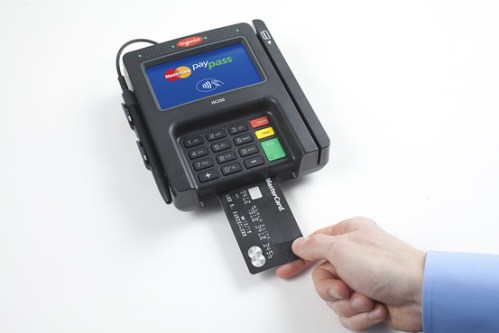
It’s a payment ritual as familiar as handing over a $20 bill, and it’s soon to go extinct: prepare to say farewell to the swipe-and-sign of a credit card transaction.

Beginning later next year, you will stop signing those credit card receipts. Instead, you will insert your card into a slot and enter a PIN number, just like people do in much of the rest of the world. The U.S. is the last major market to still use the old-fashioned signature system, and it’s a big reason why almost half the world’s credit card fraud happens in America, despite the country being home to about a quarter of all credit card transactions.

The recent large-scale theft of credit card data from retailers including Target and Neiman Marcus brought the issue more mainstream attention, leading to a Senate Judiciary Committee hearing this week. Executives told the senators that once the country transitions to the new system — which includes credit cards embedded with a microchip containing security data — these kind of hacking attacks will be much more difficult to pull off.

The shift is coming though: both MasterCardMA +0.05% and VisaV -0.64% have roadmaps for the changeover, and both have set October, 2015 as an important deadline in the switch. But why has it taken this long, and how will the changeover work for card users and businesses?

We spoke with MasterCard’s Carolyn Balfany, the company’s expert on all things related to the new payment system, known as EMV, that will lead to the end of the swipe-and-sign and the beginning of the chip-and-PIN. Here’s what she had to say.

Much of the rest of the world switched to chip and PIN cards years ago. Why has it taken the U.S. so much longer?

There’s a historical view to this. In the past, other markets migrated for two reasons. First, there were higher fraud rates in some other markets, and they wanted to make this move to combat fraud. Second, this system can operate in offline mode – the card and the terminal can authorize a transaction independent of communication with the bank’s systems. In some other markets they struggled with robust telephony networks, so this offline capacity was attractive.

Both those factors were not driving factors here in America. Fraud was more prominent in some other markets, but what has happened since then is that as other markets migrated to EMV and became more secure, fraudsters migrated their activity to markets with less security. We saw fraudsters move over to the US market – they are looking for the path of least resistance.

There were also some more specific challenges to US migration to the new system. Because the US is one of the largest and most complex markets, the business cases for the costs had to be established. And there were requirements of the Durbin amendment, mandating all us debit transactions are able to go across at least two networks, which took some time for the industry to sort out.

It seems now like there is agreement on the switch. So when will the changeover happen?

For Mastercard, now is the time, and we’ve been very consistent on that message for years. We introduced our roadmap for migration in 2012, and that roadmap says that for face-to-face transactions, where a consumer uses their card at a merchant’s location, the liability shift will happen in October, 2015.

October 2015: The End of the Swipe-and-Sign Credit Card – Corporate Intelligence – WSJ.

Wondering if Your Flight will be on time?

Lots of people will be traveling this holiday season, and Moore Bookkeeping wants you to make it safely! If you’re traveling by air, here’s a website I learned about recently that is very helpful.

www.flightstats.com

You can search any airport and any flight and even use their notification services to have changes and alerts sent to your mobile phone. Very handy if you’re stuck in the airport and need up-to-the-second information. This information feeds directly from the FAA and is a one-stop location for all kinds of airline information. Also, it’s all free.

Travel safely, and have a wonderful holiday season! Godspeed!

ATTN BUSINESS TAXPAYERS! Section 179 Deductions will dwindle to 25,000 in 2014

The bonus depreciation tax break is set to expire on December 31st, and the dollar limits for Section 179 are to drop from $500,000 with a $2.5 million to $25,000 with a $200,000 ceiling.

Ashlea Eberling suggests that it makes sense to accelerate purchases before year’s end citing that under section 179 as it presently stands, a small business owner may deduct the entire cost of up to $500,000 of equipment that has a 20-year life.


–Forbes

Fourth Largest Tax Prep Business In The Country Shut Down By Feds – Forbes

Instant Tax Service (“ITS”), the fourth-largest tax preparation business in the United States, has been ordered by a federal court judge to shut down its operations.

U.S. District Judge Timothy S. Black found that ITS had a culture of “fraud and deception.” The order, which was quite extraordinary, was said to be “necessary to protect the public and the Treasury.”

via Fourth Largest Tax Prep Business In The Country Shut Down By Feds – Forbes.

Celebrating Moore Bookkeeping’s 2-Year Anniversary in business!

Opening the bookkeeping business, helping business owners make their dreams come true, finally having control over the kind and quality of work I do—this has all been a dream come true for me.
I’d like to take a moment to thank everyone for their support! I truly couldn’t have done it without you. If you ever have financial questions, I hope you’ll give me a call and give me a chance to return the favor….
In his “Conclusion” chapter of Walden, Thoreau says, “I learned this, at least, by my experiment; that if one advances confidently in the direction of his dreams, and endeavors to live the life which he has imagined, he will meet with a success unexpected in common hours. He will put some things behind, will pass an invisible boundary; new, universal, and more liberal laws will begin to establish themselves around and within him; or the old laws will be expanded, and he will live with the license of a higher order of beings. If you have built castles in the air, your work need not be lost; that is where they should be. Now put the foundations under them.”
Godspeed,
Debra

Zombies and the IRS

Recently an Ohio judge turned down Donald E. Miller Jr.’s request to be declared alive. Miller, according to the state of Ohio, is legally dead.

Move up http://i.forbesimg.com tMove down

Miller was declared dead nearly 20 years ago after he disappeared. His ex-wife, Robin Miller, asked a judge for the declaration after Miller went missing so that her daughters could receive Social Security benefits. Miller, who owed tens of thousands of dollars in child support, and an admitted alcoholic, told the judge this week that he wasn’t dead – he had merely drifted for a number of years.

What brought Miller, er, back from the dead? He wants a driver’s license and needs a valid Social Security number.

If the whole situation feels macabre, it is. It’s also not as unusual as you’d think to be declared dead: nearly 40 people per day are “accidentally” deemed dead by the feds each year. A federal database, nicknamed the “Death Master File” is filled with tens of thousands of Americans reported as dead – much to their surprise. The Death Master File was created in 1980 by the United States Social Security Administration and is better known as the Social Security Death Index (SSDI). The file has a disturbing amount of personally identifying information – including name, dates of birth and death and Social Security Number. And it’s all public information.

Judge Orders Man To Stay Dead Despite His Insistence He’s Alive: Could You Be Next? – Forbes.

One more thing…if you’re wondering if the IRS thinks you are no longer among the living, check out this website: http://ssdmf.info/ I found both of my grandparents, so yeah, it works. I, fortunately, am not ready for the Walking Dead quite yet. –Debra

Order Your IRS Forms Online for Free

If you’re an employer, you’ve probably purchased those red tax forms at one point or another from an office supply house. They aren’t cheap…so why not get them for free?

You may not know that you can order W-2’s, 1099’s and other forms online from the IRS, and they will be mailed directly to you for nothing. (After the IRS is up and running again, of course.)

The website for ordering is here: http://www.irs.gov/Businesses/Online-Ordering-for-Information-Returns-and-Employer-Returns

I recommend ordering them soon so you’ll be ready when the tax year ends. It does take a week or so (normally) to get them.

(I’m going to order some today and we’ll see how long it does take…)


IRS: Pay me now…I’ll pay you later.

The Internal Revenue Service has temporarily stopped sending out tax refunds, and the Tax Court has suspended operations during the federal government shutdown, as lawmakers in Congress continue their battle over delaying or defunding “Obamacare” (the Affordable Care Act) for a year.

The Internal Revenue Service reminded taxpayers that the October 15th deadline remains in effect for people who requested a six-month extension to file their tax return.

While the current government shutdown has shuttered many offices and turned off many services, it “does not affect the federal tax law, and all taxpayers should continue to meet their tax obligations as normal,” the IRS said in a statement.

Over 12 million people filed for automatic six-month extensions earlier in 2013, most of whom will have to file by the October 15 deadline. Some groups do have more time, the IRS noted, including members of the military and others serving in Afghanistan or other combat zones, as well as people in parts of Colorado affected by severe weather, flooding, landslides and mudslides.

The service encouraged taxpayers to e-file their returns, but said that it would accept returns both electronically or on paper, and accept and process payments accompanying either type of return. It will not be able to issue refunds, however, until normal government operations resume.

–from Accounting Today for the Web CPA

What Small Businesses Need to Do for Obamacare Before Oct. 1 – Businessweek

The health insurance marketplaces created by the Affordable Care Act will open on Oct. 1. Most small employers—those with 50 or fewer full-time employees—are not required to offer health insurance coverage under the Affordable Care Act. Even businesses with more than 50 full-time employees have gotten a one-year reprieve from penalties if they don’t offer insurance. But all companies, regardless of size, are required to notify their employees about the Obamacare marketplaces.

The state and federal insurance exchanges are websites on which individuals and small businesses can shop for health plans. Though the deadline is less than a month away, many small businesses don’t know they have to notify employees, says Keith McMurdy, a benefits partner in the law firm of Fox Rothschild in New York. He has spoken to dozens of small business groups around the country in the past year and says most small business owners are unaware of the requirement or are under the misconception that it doesn’t apply to them because they’re too small to be governed by the health-care reform law’s mandate. McMurdy says it’s not clear how the requirement will be enforced, but penalties for businesses that don’t comply could reach $100 per worker per day.

“An employer with 10 employees typically says, ‘I don’t have to worry about it, because I don’t have to offer insurance.’ A lot of them are going to miss the deadline and be unpleasantly surprised when they do,” he says. The notification requirement applies to any business regulated under the Fair Labor Standards Act, which covers all companies with at least one employee and $500,000 in annual revenue. “There are no exceptions for small employers, which means nearly everybody has to get out this notice to their employees. We have been getting a lot of questions about it from small business owners,” says John Barlament, a lawyer in the employee benefits group at Quarles & Brady in Milwaukee.

The U.S. Department of Labor has posted information about the notification requirement on its website and has provided model notices that can be used both by employers who offer insurance (PDF) and by those who do not offer insurance (PDF).

The one- to three-page model notices can be downloaded, filled out, and printed, either for distribution in the office or for mailing to employees’ homes, McMurdy says. Employees who come on board after Oct. 1 must get the notice within 14 days of their start date with the company. “People ask me what’s the safest way to do this, and I always say, if the government gives you a model, use it. Or make yourself a comparable form, modified the way you need it, and use that. The safest route is to put it in the U.S. mail or follow the instructions for distributing it electronically,” he says. “The employer obligation is met at that point. I don’t see any requirement that you have to get signatures saying your employees have received it or maintain proof of the fact that you gave it out.”

The second and third pages of the model notices are optional, Barlament says. He is encouraging his small business clients to include the upper portion of page 2, which describes the insurance coverage provided by the company, but to leave off the rest of that page and page 3, which he feels could be confusing.

Sending out this notice is another in a long list of compliance issues for business owners around the ACA, McMurdy says, and most that he speaks with resent the extra work. However, he is starting to sense “general acceptance of the misery” and is hearing more employers say they expect to get used to the major provisions of the law when they go into effect next year. “It’s kind of like when COBRA came in and business owners said, ‘This will kill us, this is insane,’ and before long they got used to the idea.”

via What Small Businesses Need to Do for Obamacare Before Oct. 1 – Businessweek#!#!#!.